Deposit for Rental House: How Much Landlords Charge and When It Doubles
How much is a deposit for a rental house? Usually one month's rent, sometimes two. See the move-in math on a $1,500 house and how to get it all back.
By the 3xRentCalculator.com team
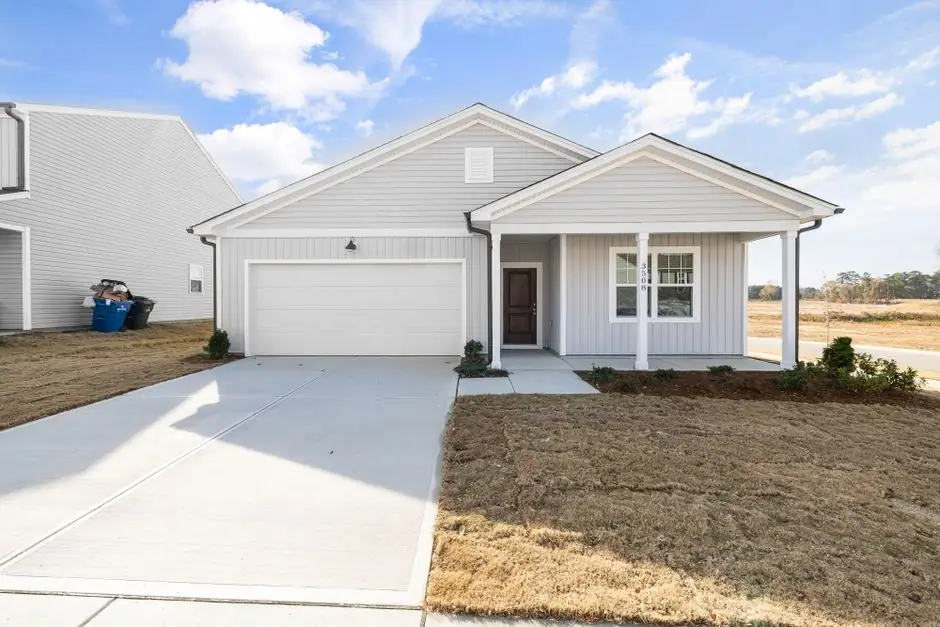
A deposit for a rental house is usually one month’s rent, so a $1,500 house normally means a $1,500 deposit. Across states and landlords the figure runs from about half a month to two months, which on that same house is $750 to $3,000.
Income is the first hurdle in a rental application, and qualifying for a 3x rent requirement covers that part. The deposit is the second one, and it stops people who passed the first.
How much is a deposit for a rental house?
One month’s rent is the standard. Single family houses land at the top of the range more often than apartments, because there is more that can break: yard, roof, appliances, sometimes a garage.
Three things push the number up:
- Income below the landlord’s cutoff
- A thin credit file or a low credit score
- Pets, a waterbed, or anything else the lease treats as added risk
Three things push it down: a state cap, a long clean rental history, and a house that has been sitting empty.
The deposit is your money the whole time the landlord holds it. That is the difference between a deposit and a fee, and it is the core of what a security deposit legally is.
What you hand over on move-in day
The deposit is rarely the only payment. Here is the common stack on a $1,500 house.
| Item | Amount |
|---|---|
| First month’s rent | $1,500 |
| Security deposit, one month | $1,500 |
| Last month’s rent, if asked | $1,500 |
| Total up front | $4,500 |
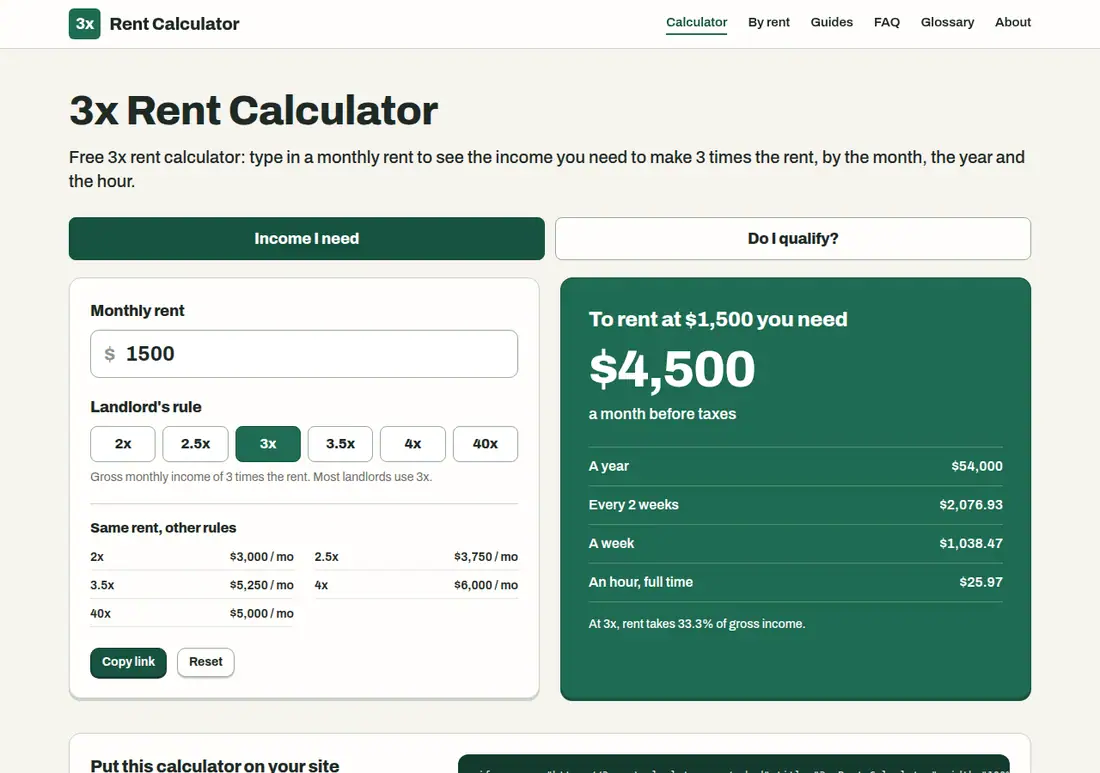
That $4,500 is worth a second look. It is the same number as the gross monthly income the 3x rule asks for on a $1,500 house, which works out to $54,000 a year or $25.96 an hour at 40 hours a week.
So the move-in cost can equal a full month of the income you had to prove. Working out whether you make 3x the rent tells you if you qualify. It says nothing about whether that cash is in your account.
Last month’s rent is not a deposit. It is prepaid rent, it covers your final month, and it never comes back as cash.
When a landlord asks for a larger deposit instead of more income
This is the standard trade. Say you earn $4,000 a month and the rent is $1,500. You are at 2.67 times the rent, under the line. What to do when you don’t make 3 times the rent runs through the options, and a bigger deposit is near the top.
What a landlord may propose:
- Two months of deposit instead of one, so $3,000
- One and a half months, or $2,250
- A co-signer or a guarantor who signs for the rent
- Two or three months of rent paid in advance
Ask for the swap before you apply, not after a denial. Put the offer in the application notes along with the reason your income reads low.
One limit on this: the deposit has to be set by risk, not by who you are. Charging a higher deposit based on race, religion, family status or disability is illegal under federal fair housing law, even when the landlord frames it as a risk decision.
Limits on what a landlord can hold
State law sets the ceiling, and the ceilings are not alike. Several states cap deposits at one month’s rent, a few allow two, and some have no statutory cap at all. California and Massachusetts are examples of one month states. Florida and Texas set no dollar limit.
Caps often cover more than the refundable deposit. Where last month’s rent counts toward the cap, a landlord who takes one month as a deposit cannot also take last month up front.
Most states also control how the money is held. Common rules include a separate bank account, interest paid to the tenant, a written receipt naming the bank, and a deadline for returning the balance after move-out. Those deadlines usually fall between about 14 and 45 days depending on the state.
For the general concept, Wikipedia’s entry on the security deposit is a good primer, and Cornell’s legal encyclopedia explains how deposit rules sit in landlord and tenant law. For your actual cap, read your state’s landlord tenant statute or your city’s rental housing office page.
Deposit alternatives: insurance, installments and move-in fees
Some landlords offer a substitute for the lump sum.
Deposit insurance, sometimes sold as a surety bond, charges a small monthly fee instead of one month up front. The fee is not refundable, and you still owe the landlord for damage. The insurer pays the landlord and then bills you.
Installments split the deposit over the first few months of the lease. A few cities require landlords to offer this. Elsewhere it is worth asking for, especially if you can show a strong pay history.
Move-in fees are not deposits. A move-in fee, an administration fee or a nonrefundable pet fee is gone the moment you pay it. Read the lease line by line and add up what is refundable and what is not before you sign.
Getting the deposit back at move-out
Most of the work happens on day one, not at the end.
Walk the house before you move in. Photograph every room, every scuff, the appliances and the yard. Put the dates on a written condition report and get the landlord to sign it. That document is what wins arguments later.
At move-out, clean to the condition in those photos, repeat the walkthrough and photos, and give the landlord a forwarding address in writing. Normal wear and tear is not deductible anywhere in the country. Faded paint and worn carpet are wear. Holes in a wall and a cracked countertop are damage.
If the itemized list never arrives or the deductions look invented, send a written demand and then use small claims court. Many state laws add a penalty when a landlord keeps a deposit without cause.
Check the income side first
The deposit follows the rent, and so does the income test. Enter the rent in the 3x rent calculator to see the gross monthly and yearly income a landlord will want to see, then plan on one to two months of that rent in cash for move-in day.
Frequently asked questions
How much is a deposit for a rental house?
One month's rent is the standard. On a $1,500 house that is a $1,500 deposit. The full range runs from about half a month to two months, so $750 to $3,000 on that same house. Houses sit at the higher end more often than apartments because there is more to repair, and several states cap the amount at one month.
What is the average rent deposit?
There is no single national average, because state caps and local markets set the number. One month's rent is the most common amount by far, and it is the figure to budget for. Expect more if your income is under the landlord's cutoff, your credit file is thin, or you have a pet. Expect less in a slow market.
Can a landlord charge a bigger deposit if I don't make 3x the rent?
Often yes, where state law allows it. A larger deposit is the usual trade for income that falls a little short. On a $1,500 house, a landlord might ask for two months instead of one, so $3,000. In states that cap deposits at one month, the landlord asks for a co-signer or prepaid rent instead.
How much cash do I need up front for a $1,500 rental house?
Budget $3,000 to $4,500. That is the first month's rent at $1,500, a one month deposit at $1,500, and last month's rent if the landlord asks for it. Any application fee, pet fee or move-in fee sits on top. The deposit comes back at move-out; fees and prepaid rent do not.
When do I get the deposit back?
After you move out, within a deadline set by state law. Those deadlines commonly run from about 14 to 45 days depending on the state, and the landlord usually has to send an itemized list of anything withheld. Normal wear and tear cannot be deducted. Give your forwarding address in writing before you hand back the keys.